The Fallen Monarch is on the same trail as the General Grant Tree in the Grant Grove, and it was easily my favorite thing we saw in all of Kings Canyon.
It fell maybe 300 years ago with best guesses being either in the late 1600s or early 1700s. But no one really knows for sure, because apparently the tree was already hollow from fire damage when it fell, meaning experts can’t use the growth rings reliably to calculate. Additionally, there are no known indigenous oral traditions or written records talking about when it was still standing.
What Happened After it Fell
Despite having fallen centuries ago, the tree is surprisingly intact due to the giant sequoia’s talent of decay resistance.
It has been used for some crazy things! It has acted as temporary housing for early settlers, and it was a saloon and hotel for grove workers. In the late 1800s, stagecoaches would drive through it. Tourism promoters would stage photos of the horse-drawn wagons driving through the log to bring in visitors. It even acted as a stable for U.S. Cavalry horses from 1890-1914!
Today
Fast forward to today, visitors can still walk through all 124-feet of the hollow trunk while visiting the General Grant Tree. It was my favorite highlight of the whole park, so much we came twice!
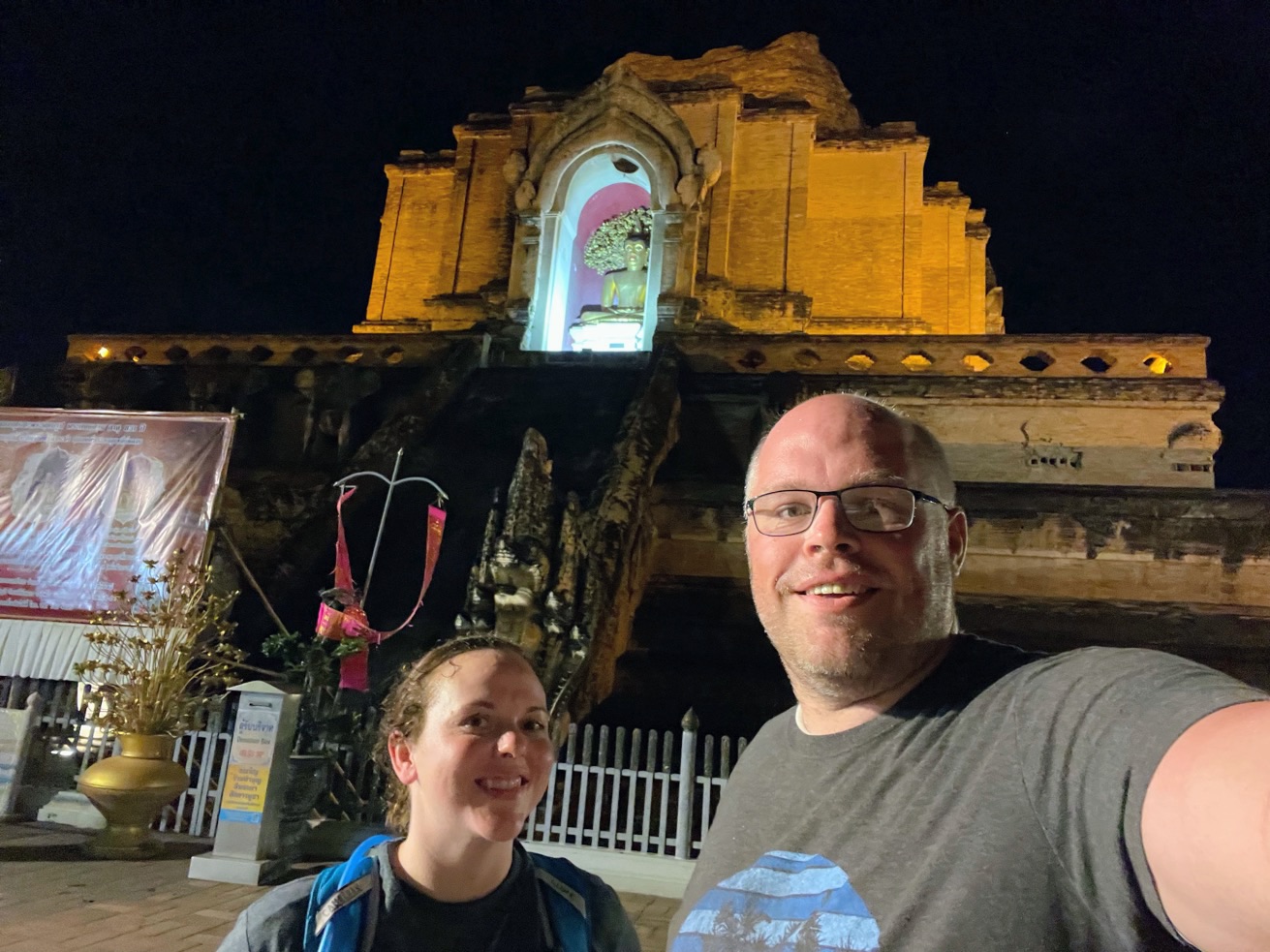
Chris enjoying his walk through the Fallen MonarchA “window” inside the Fallen Monarch
I love experiences like this where I can interact with something tangible that so many people before have touched and loved. In these kind of moments, I always imagine I can hear the hushed whispering of the ghosts of those who came before.
National Park sign at the Fallen Monarch
Long after the crowds leave and the forest grows quiet, the Fallen Monarch will still be there—holding centuries of stories within its weathered bark, waiting for the next visitor to walk through and wonder.
If you like this post, you can subscribe for free using the Subscribe button on the bottom right corner of your screen!
Chris turned 40 at the end of 2025, and I wanted to do something special without throwing a big party that he wouldn’t appreciate. So I gave him what I knew he’d appreciate the most: 40 slices of pizza!
Our eighth stop was: The Pie 4300 Harrison Blvd, Ogden, UT 84403
If “Utah-style” pizza is a thing, it’s probably the Pie. The first and most iconic location is “The Pie Underground,” opened in 1980 near the University of Utah in downtown SLC. It’s a fun spot, and subsequent locations have followed suit with the college theme and graffiti walls. When Dave Portnoy (One Bite, everybody knows the rules) came to Utah in September 2025 for a University of Utah game, this was the first pizza restaurant he rated. And the controversy is absolutely true- the pizza they gave him was NOT the same as what they sell to locals. Guaranteed they altered their pizza to reflect Dave’s preferences. Not cool! Dave Portnoy’s official rating of this altered pizza was a 6.9.
I’ve eaten at this iconic location a handful of times, but this pizza review is specifically for pizza we got at their second location in Ogden, opened in 1996.
First of all, don’t ever make the mistake of coming to the Pie without getting their Cheese Pull-a-Parts (mozzarella, not cheddar). Pay for extra ranch for dipping, and thank me later. They are delicious, but the second they cool down, they’re not good anymore. So eat ‘em hot and fresh and don’t bother bringing home leftovers, they do not reheat well.
In addition to the Pull-a-Parts, we also got a Half cheese/ half pepperoni pizza to share with the kids. When rating pizzas, we most of the time stick to simplicity on purpose. There’s a lot of fancy pies on the menu, but the building blocks of the Pie Pizzeria aren’t great on their own. The fancy ingredients are what makes it shine.
The Pie Pizzeria half cheese/half pepperoni pizza
On a whim, I also ordered the fancy sounding Mac ‘n Cheese. Apparently I’m a kid at heart and love a good Mac ‘n cheese dish. I thought the kids would love it, but they were completely uninterested. I was drawn to the promise of cheddar, Gouda, cream cheese, Romano, and Parmesan. But I was disappointed by the full-on taste of velvet.
The Pie’s Mac & Cheese promise
When Chris took a bite, before I had voiced my opinion mind you, before the pasta had barely hit his tongue, he said “too much Velveeta.”
Mac & Cheese? More like Mac & Velveeta
The Pie Pizzeria, much like the band Rage Against the Machine, has not stood the test of time.
Chris rated his pizza a 6.3 – and this rating is on true Pie Pizzeria pizza, unlike what Dave Portnoy was served.
If you like this post, you can subscribe for free using the Subscribe button on the bottom right corner of your screen!
Since I didn’t learn budgeting skills or how to file taxes, I’d say the most important thing I learned in high school was an appreciation for world art.
One of the most influential classes I ever took was AP Art History. I would say that I enjoyed art before that, and I was even a halfway decent artist myself. But learning the origin stories of some of the world’s oldest art and continuing through the ages really opened my eyes.
I learned that I wanted to view the world through the eyes of all those artists, from the creator of the Venus of Willendorf to Michelangelo’s Pieta and beyond.
I didn’t have the means to travel at the time, but I knew that once I could, I would make travel a priority. That class didn’t just teach me about art—it gave me a lifelong sense of curiosity about the world.
If you like this post, you can subscribe for free using the Subscribe button on the bottom right corner of your screen!
We spent two days in Kings Canyon National Park, but much of the park was closed in 2023 due to severe winter storms that damaged Highway 180, the primary road into the canyon. With limited access, we had to reevaluate our plans.
On our first day, after packing up our trailer, we made the hour-and-a-half drive from Sequoia National Park to our campground on the Kings Canyon side. We visited the General Grant Tree, checked out a few overlooks, and had our misadventures with the Boole Tree. The overlooks were beautiful, but drivebys are sufficient. We did stop for a picnic at Panoramic Point.
On day two, we headed back into Sequoia National Park to hike to Tokopah Falls and revisit the Big Trees Trail. Back on the Kings Canyon side, we stopped at the Big Stump and made a return visit to the General Grant Tree.
General Grant Tree
This is the 2nd largest Sequoia tree in the world, just behind the General Sherman Tree. I thought it was just as impressive, with the added benefit of being less crowded and easier to access. The surrounding grove features a nice, easy, and short loop trail to enjoy as well.
General Grant, 2nd largest Sequoia Tree in the world
One interesting note about this tree is that it was officially named the Nation’s Christmas Tree back in 1926, a title still honored every December.
How do Sequoias get so big anyway?
These massive trees grow bigger and live longer than almost any other living things on earth, thanks to the following factors:
Insulating Bark – Their bark, rich with tannins and up to about 2 feet thick, protects against fire, insects, and disease.
Many Tiny Seeds – A giant sequoia can produce up to about 400,000 tiny seeds per year (about the size of an oat flake).
Lifelong Growth – Giant sequoias continually grow throughout their lives, adding volume year after year.
Widespread Roots – Their shallow roots spread 100-200 feet outwards and can intertwine with neighboring trees, thus sharing resources.
The Fallen Monarch
As impressive as the General Grant Tree is, my favorite part of the Grant Grove by far was the Fallen Monarch. I was so fascinated by the Fallen Monarch that I’ll be dedicating an entire post to it next week!
Big Stump
First of all, you can skip the trail that takes you here and take a shortcut. The shortcut is right next to the park entrance on the side of the road. If you can’t find it, ask the entry attendant and they’ll point you right to it.
I honestly didn’t really know what to expect when coming to see a tree stump, but I loved it! I thought it was so fun to climb up the cute ladder and walk around on the huge stump! I went up and down the ladder three times and felt like a kid again.
Big StumpThe cutest ladder to the Big Stump
So this stump is all that is left of what was once known as the Mark Twain Tree. It sounds like it was probably over 1,300 years old at the time it was cut down back in 1891. Sections of the trunk were shipped to New York and London for display.
It really is tragic the nonchalant way these ancient beauties were exploited. But at least it was a way to bring to light the need for protecting these magnificent giants.
Up Next
In next weeks post I will detail my number one favorite spot in all of Kings Canyon National Park- the Fallen Monarch!
If you like this post, you can subscribe for free using the Subscribe button on the bottom right corner of your screen!
Chris turned 40 at the end of 2025, and I wanted to do something special without throwing a big party that he wouldn’t appreciate. So I gave him what I knew he’d appreciate the most: 40 slices of pizza!
Our seventh stop was: Domino’s 1735 Skyline Dr, South Ogden, UT 84405
As far as chain pizza places go, Domino’s Pizza is our go-to. Chris is a big fan of their pan pizza, which is definitely their best dough style.
I never liked pepperoni as a kid but I’ve come to love it as an adult. However, not all pepperoni is created equal. It turns out I don’t much care for the pepperoni Domino’s uses. Their other toppings and the cheese are solid. I occasionally get their NY-style pizza, but if you’re ordering from Domino’s, the pan pizza is really where it’s at.
We almost always also get their Stuffed Cheesy Bread, which is consistently excellent.
You can’t always have top-notch restaurant pizza, and Domino’s fills the weeknight pizza role well.
Domino’s pan pizza
Chris rated his pizza a 6.1
If you like this post, you can subscribe for free using the Subscribe button on the bottom right corner of your screen!
If I could have something named after me, I’d want it to be a hiking trail.
A good hiking trail can challenge you, humble you, and reward you with views you can’t get any other way. They can create stories and test your grit. Sometimes they even have the power to change you.
The best trails in the best mountains can remind you how small you are. They remind you of a magnificent Creator and make you feel love.
Hopefully the trail named after me would be one that makes you feel stunned from beginning to end and has a beautiful destination. I’d want it to be challenging, but worth the effort.
That’s what hiking has done for me. It’s shown me that hard things are worth doing, that progress happens one step at a time, and that the best views usually come after the toughest climbs.
So if my name were ever placed on a sign at a trailhead somewhere, I’d hope it would stand for perseverance, adventure, and the joy of getting outside, even when it’s hard.
Though I’d settle for having a deliciously fudgy, cookie-filled, high milkfat ice cream flavor named in my honor.
If you like this post, you can subscribe for free using the Subscribe button on the bottom right corner of your screen!
Every Sequoia tree is special in its own way, and we felt drawn to seeing as many as possible, especially those of renown.
Since we had already seen many of the 10 largest, we wanted to see more. Some of the trees were not located conveniently enough, but Boole Tree is. It’s just outside of the National Park boundary and pretty close to Kings Canyon National Park.
This was our biggest “adventure” of the day, if your definition of adventure includes getting lost, running into a random herd of cows, and getting up close and personal with the Boole Tree, the 6th largest tree in the world. That said, see if you can learn from our mistakes!
Disclosure: This post contains affiliate links. If you click and make a purchase, I may earn a small commission at no extra cost to you. Thanks for supporting my blog!
Don’t follow Google Maps to get there
We had downloaded an offline map of the whole Kings/Sequoia area off Google Maps. Even with that, Google Maps tries to take you to the Chicago Stump, and then it takes you in a maze of really rough terrain and wants you to backtrack and take roads that aren’t really there. There appears to be active tree logging in this area, so some of the roads it suggests are blocked by recently logged trees.
INSTEAD- follow the map provided by the National Park. Don’t turn down an off road unless you see the sign that gives arrows to Converse Basin, Stump Meadow, and Boole Tree Trail.
Pay attention to this sign taking you to the Boole Tree
Have 4WD or at least high clearance
We had read reviews saying that you need 4WD to get to the trail, and we drove a Chevy Silverado. The trail Google Maps took us to where we got lost for a good half hour was ROUGH terrain and we were glad to have the truck. Once we found the right road we were surprised by the reviews about the rough terrain as it seemed pretty clear. However the last 0.8 miles or so to the trailhead is bad and you need good clearance to get through.
If you don’t have a car that can handle it but want to see Boole Tree, you could walk that last bit to the trailhead, which would make the total hike 3.6 – 4.1 miles instead of 2-2.5 (we did the two mile out and back instead of the whole 2.5 loop).
Wear SHOES, not Flip Flops
I often wear my trusty Croc flip flops on short easy hikes- they have good traction and are comfortable and I don’t get blisters or get too hot. I wore them here, but there were muddy spots and I was unable to avoid one of them, so the remainder of my hike was sludgy and slippery.
Chris, however, also wore flip flops and managed to stay dry the whole time.
*The trail to the Boole Tree is NOT Croc Flop approved!*
Wear PANTS, not shorts
There were lots of sharp brambles we passed through and I wished I wasn’t wearing shorts.
Pros & Cons of Visiting the Boole Tree
PROS:
The Boole Tree itself is spectacular!
You can touch the tree, and even go inside of it! There are a few “rooms,” though I only entered one of them.
We had the whole tree to ourselves! We didn’t see a single soul until we were close to our truck on the way back.
Solitude with the Boole TreeInside the Boole Tree, looking worse for wear!My trusty Croc Flops inside the Boole TreeSome interesting plants on the trail to the Boole Tree – I found out later they are wild Sierra gooseberries
CONS:
It was difficult to get to.
It was muddy in parts.
The trail leading up to the tree is not particularly beautiful until the final descent.
Overall, I’m very glad we did this hike and spent time with the Boole Tree. It took us a little over an hour to get there and back from the parking lot. There’s an outhouse available if needed. The hike was rated as moderately difficult, which I didn’t believe when we started. But it is steep and muddy, and we ended the adventure dirtier and bloodier than we’d started. But the payoff was worth it: quiet and peaceful time spent with an ancient giant.
If we ever get the opportunity to go again, we’ll gladly take it and be much better prepared!
If you like this post, you can subscribe for free using the Subscribe button on the bottom right corner of your screen!
Spring is one of my favorite times to travel. The weather is comfortable, the crowds are manageable, and everything feels fresh and alive again. If you’re looking for destinations that showcase the beauty of spring without extreme temperatures, these three places consistently rise to the top: Savannah, Sedona, and San Diego. Each offers its own version of springtime magic, from blooming flowers to perfect hiking weather to coastal sunshine.
Here’s why these destinations are worth adding to your spring travel list.
🌸 Savannah, Georgia — Southern Charm in Full Bloom
Why Visit: Spring is when Savannah truly shines. Azaleas bloom across the historic district, temperatures are pleasantly warm, and the city’s famous squares look like something straight out of a postcard.
Main Attractions:
Forsyth Park — Known for its iconic fountain and beautiful spring blooms
Historic District — Walkable streets lined with historic homes, moss-draped trees, and charming shops
Riverfront shopping and dining along the Savannah Riverwalk
Best Time to Go: March through April, when flowers are blooming and humidity hasn’t yet taken over.
What to Know Beforehand:
Spring is popular, so expect festivals and visitors
Bring comfortable walking shoes—the best way to experience Savannah is on foot
Pollen can be heavy during peak bloom
🌄 Sedona, Arizona — Perfect Hiking Weather and Desert Blooms
Why Visit: Spring in Sedona offers the sweet spot between winter chill and summer heat. Wildflowers begin to bloom, the red rock scenery is stunning, and hiking conditions are ideal.
Main Attractions:
Cathedral Rock — One of the most photographed landmarks in Arizona
Bell Rock — A popular and accessible hiking area
Scenic drives through Red Rock State Park
Best Time to Go: Late March through April for mild temperatures and comfortable hiking conditions.
What to Know Beforehand:
Parking at popular trailheads fills early
Temperatures can vary widely between morning and afternoon
Reserve accommodations in advance during peak spring travel
🌴 San Diego, California — Sunshine Without the Summer Heat
Why Visit: San Diego offers near-perfect weather in spring. You’ll enjoy warm sunshine, coastal breezes, and fewer crowds than during the busy summer season.
Main Attractions:
Balboa Park — Gardens, museums, and walking paths
San Diego Zoo — One of the most famous zoos in the world
Beach time at La Jolla Cove
Best Time to Go: April through May for warm, comfortable temperatures and fewer tourists.
What to Know Beforehand:
Coastal mornings can be cool and cloudy (“May Gray”)
Parking near beaches can be limited
Bring layers for changing coastal weather
So if you’re looking for destinations that truly capture the feeling of spring—comfortable temperatures, blooming scenery, and plenty to see and do—these three locations are hard to beat. Whether you want historic charm, outdoor adventure, or coastal relaxation, Savannah, Sedona, and San Diego each offer a memorable way to welcome the season.
If you like this post, you can subscribe for free using the Subscribe button on the bottom right corner of your screen!
When I first graduated from college and started the 8-5 life, work was something you did in the office—at a desk, during business hours, with very little flexibility. If you were out of town, you were truly out of the office. There was no logging in from the road, checking in between activities, or handling urgent tasks from afar. And doctor visits? Plan to bring a note back proving you weren’t just having a lunch date!
Technology has completely changed that reality.
Today, secure networks, cloud-based systems, video conferencing, and digital workflows allow many professionals—including me—to do our jobs from anywhere with a reliable internet connection. And with Starlink, the list of places in the world where remote work is impossible has gotten much smaller. I’ve even heard of people going to a remote location and renting Starlink from locals so they can clock some hours while OOO.
That shift has created possibilities that simply didn’t exist before. In theory, I could take a working vacation—spending the morning answering emails or attending meetings, then heading out to explore a national park, visit a new city, or enjoy time with my family. For someone who loves travel, that flexibility is as valuable as gold.
I have never yet actually taken a “working vacation.” Mostly because I’d rather be 100% on vacation mode. Plus with kids in school, I can’t just take off whenever I want anyway. Even though I haven’t done this yet, it’s fun to think about taking quick trips and getting out more often. Technology hasn’t just made my job more efficient, it has made it more adaptable to real life.
If you like this post, you can subscribe for free using the Subscribe button on the bottom right corner of your screen!
You could argue that once you’ve seen one giant sequoia, you’ve seen them all, but we weren’t willing to take that chance. These trees are thousands of years old, wildly different in shape and personality, and scattered across some of the most beautiful terrain in California. So we did what any reasonable people would do: we tried to see every major sequoia we possibly could.
Here’s a breakdown of the top 10 largest sequoias by trunk volume, plus a few extra to account for fire damage to some of the trees.
General Sherman Tree
Grove: Giant Forest Grove
Location: Sequoia National Park
The largest tree in the world by volume—and one of the easiest to visit, thanks to a paved trail.
General Grant Tree
Grove: General Grant Grove
Location: Kings Canyon National Park
Often called the “Nation’s Christmas Tree,” and second largest in the world.
President Tree
Grove: Giant Forest Grove
Location: Sequoia National Park
Named after Warren G. Harding and located directly on the Congress Tree Trail.
Lincoln Tree
Grove: Giant Forest Grove
Location: Sequoia National Park
Named for Abraham Lincoln of course, and just off the Congress Trail via a short spur near the Alta Trail.
Stagg Tree
Grove: Alder Creek Grove
Location: on private land within the Giant Sequoia National Monument (not reliably accessible to the public)
Named after Amos Alonzo Stagg, an innovative college football coach.
Boole Tree
Grove: Converse Basin Grove
Location: just outside Kings Canyon National Park in the Giant Sequoia National Monument
Named after Franklin A. Boole, a superintendent of the Converse Basin Mill who rescued the tree from logging.
Genesis Tree*
Grove: Mountain Home Grove
Location: Southern Sierra Nevada mountains
Sustained heavy damage from the Castle Fire in 2020.
Franklin Tree
Grove: Giant Forest Grove
Location: Sequoia National Park
Named for Benjamin Franklin, the path is unmarked and generally requires navigation skills to reach.
King Arthur Tree*
Grove: Garfield Grove
Location: Sequoia National Park
Destroyed in the Castle Fire in 2020 😢
Monroe Tree
Grove: Giant Forest Grove
Location: Sequoia National Park
Named for James Monroe, this tree is not officially marked, but located near established trails.
Robert E. Lee Tree
Grove: General Grant Grove
Location: Kings Canyon National Park
Named for, you guessed it, Robert E. Lee.
Floyd Otter Tree*
Grove: Garfield Grove
Location: Sequoia National Park
Named for a former manager of the Mountain Home Demonstration State Forest, this tree sustained heavy damage from the Castle Fire in 2020.
John Adams Tree
Grove: Giant Forest Grove
Location: Sequoia National Park, near the Cattle Cabin
Named for John Adams, and considering fire damage, is the 10th largest Sequoia Tree in the world.
What’s crazy is that all these giant trees started out with unbelievably small seeds in comparison. A giant sequoia seed is only about the size of an oat flake. Thousands of seeds can come from one tree in a year, but only a tiny fraction actually grow into these friendly giants.
Up Next:
We were able to see the majority of these trees since they are mostly located in the most popular areas of Sequoia and Kings Canyon National Parks. There was one tree from this list in particular that is not inside the park boundaries, but was close enough we just had to go visit. The next post in this series will detail which tree, and our (mis)adventures seeing it.
If you like this post, you can subscribe for free using the Subscribe button on the bottom right corner of your screen!